
How much One Piece cards are worth: versions, languages and the most expensive cards
Updated on ·7 min read
In short
- In the One Piece Card Game, value depends above all on the version: the same card can come as a base card, a parallel, a Manga or an SP, and the price changes a hundredfold and more.
- After that come the character, the rarity, the English or Japanese edition and the condition.
- The most expensive cards are usually Manga and special versions of the main characters: the ranking on this page uses today’s prices.
In this guide
What makes the price of a One Piece card#
How much One Piece cards are worth is decided, first of all, by the version. The commons and uncommons from packs change hands for a few cents, as in every card game; the value is concentrated in the alternative versions of the strongest cards or the best-loved characters, where the name counts for less than the printing.
An example: Roronoa Zoro, the super rare OP01-025 from Romance Dawn, the first set. The base version (€1.48) and the parallel (€212.79) are the same card, with the same effects and the same number. What changes is the artwork, the foil finish and how many copies come out of packs. And the price, as you can see.
Besides the version, what counts is the character (Luffy, Shanks, Zoro, Nami and the other leads have a market all of their own), how strong the card is in the game, the edition, English or Japanese, and the condition.
Rarities and versions, from common to Manga#
Next to the card number, which takes the form OP01-025 (set code and position), you will find the rarity code: C common, UC uncommon, R rare, SR super rare, SEC secret rare, L for Leaders. Promos carry a P. The code only tells half the story, though, because alternative versions carry the same number and the same rarity as the base card.
Leaders
Every deck starts from a Leader. In packs it comes in a normal version and a parallel version, and the normal one is generally worth very little: just compare the Leader Monkey.D.Luffy from OP-15 (€0.11) with its parallel version (€65.00).
Parallels
The parallel, which collectors also call Alt Art, is the same card with different artwork and a richer foil finish. It exists for Leaders, for SRs, for SECs and for some rares, and it is the first thing to check when you pull a famous character from a pack. From Kingdoms of Intrigue (OP-04) onwards, parallels have a small star above the rarity code, at the bottom right: it is the quickest way to recognise them. On the first sets there is no star, and the artwork is what you go by.
Manga
The top step: a parallel whose background is made of manga panels, printed in very few copies and almost always given to the main characters. Shanks OP01-120 from Romance Dawn shows the whole scale in a single card: the base SEC (€3.10), the parallel (€69.00) and the Manga version (€2,500.64). Same number, three different markets.
SP and the other special versions
SPs are usually cards from earlier sets reprinted with new artwork and a special frame, and inserted at a very low print run into a later expansion. Then there are reprints, versions with a tournament stamp and other variants that mainly interest people collecting complete sets. In the catalogue, versions carry the English names the market uses (Alt Art, Manga Comic Art, Special Alt Art…), and each has its own price: before buying or selling, always check which one the listing is about.
Japanese or English?#
Anyone collecting One Piece in Europe chooses between two editions, Japanese and English, with the same sets and the same codes. For years the English edition arrived a few months later; since 2026 the two releases have run almost side by side, a few days or weeks apart. They remain two separate markets, and there is no rule about which is worth more: it depends on the card, on how many copies are around and on who is looking for them.
There is one practical difference, though. In Europe, Japanese cards change hands less than English ones, so their prices should be taken as indicative and always compared with the listings. The Japanese expansions are in the One Piece catalogue in the Japanese edition; the official list of releases is on Bandai’s website.
The most expensive One Piece cards today#
These are the most valuable cards among the most recent English expansions, at today’s prices. The ranking only counts cards whose price is confirmed by more than one source, and at the top, as a rule, you will find Manga and special versions of the lead characters.
- 1
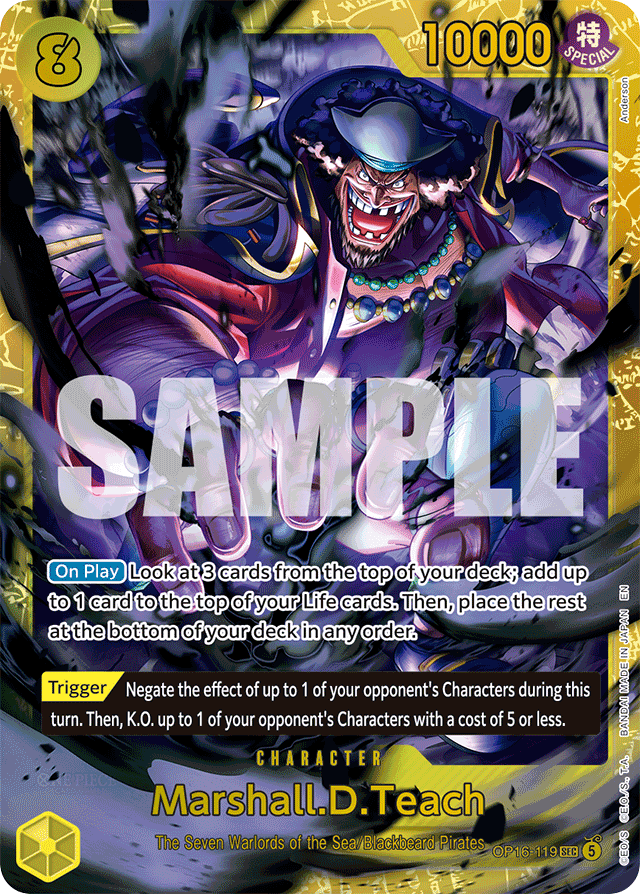 Marshall.D.TeachThe Time Of Battle · #OP16-119€38.76
- 2
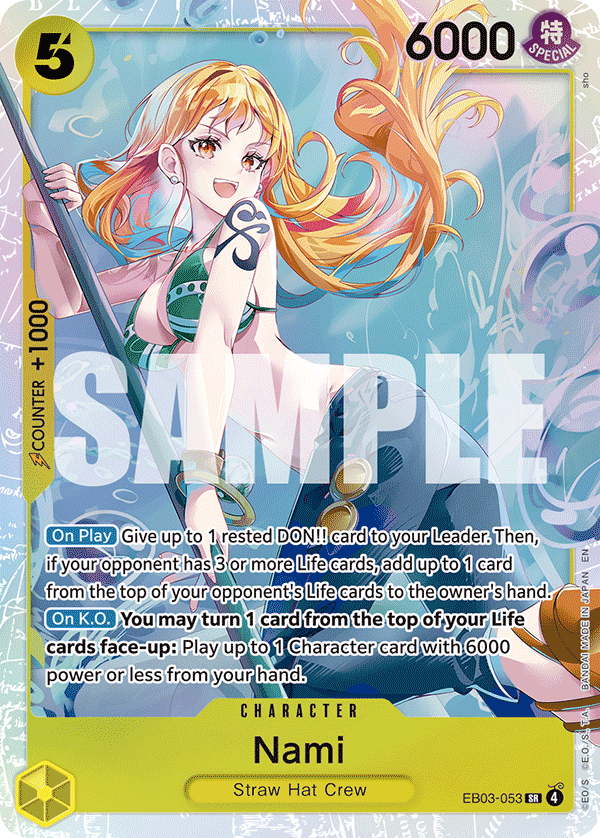 NamiONE PIECE HEROINES EDITION - EB-03 · #EB03-053€22.31
- 3
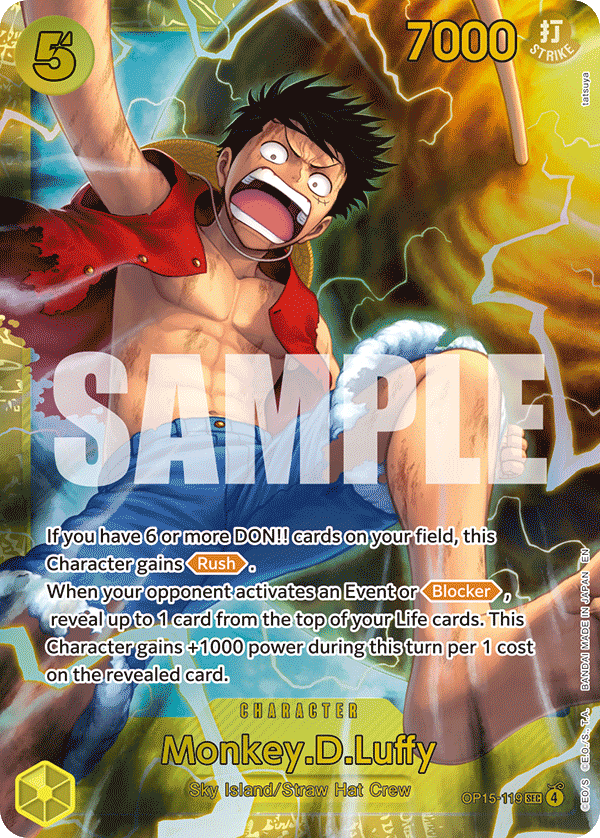 Monkey.D.LuffyAdventure on Kami's Island · #OP15-119€20.32
- 4
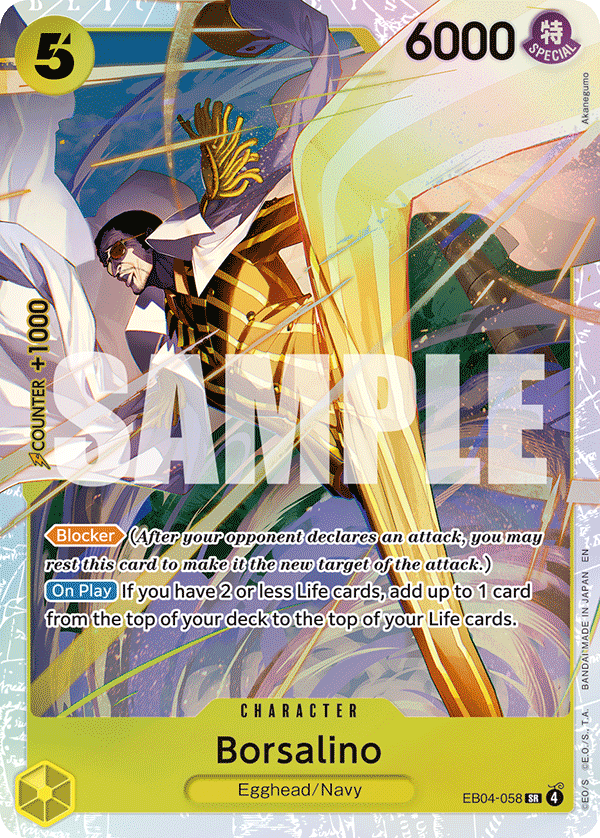 BorsalinoEgghead Crisis · #EB04-058€18.22
- 5
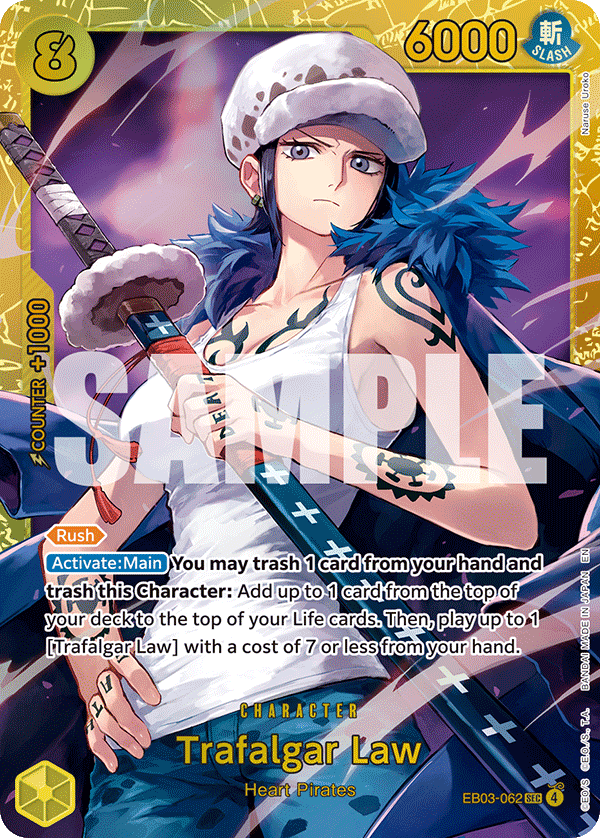 Trafalgar LawONE PIECE HEROINES EDITION - EB-03 · #EB03-062€16.17
- 6
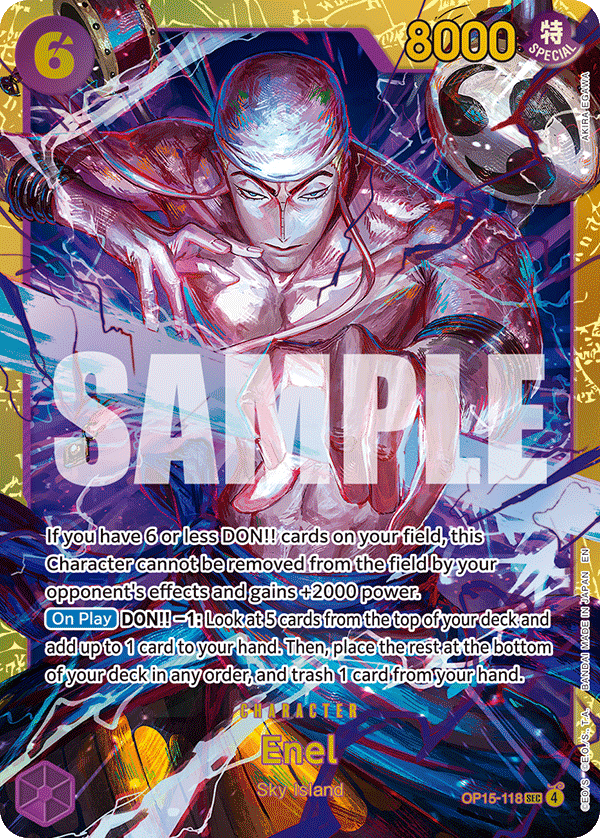 EnelAdventure on Kami's Island · #OP15-118€13.21
- 7
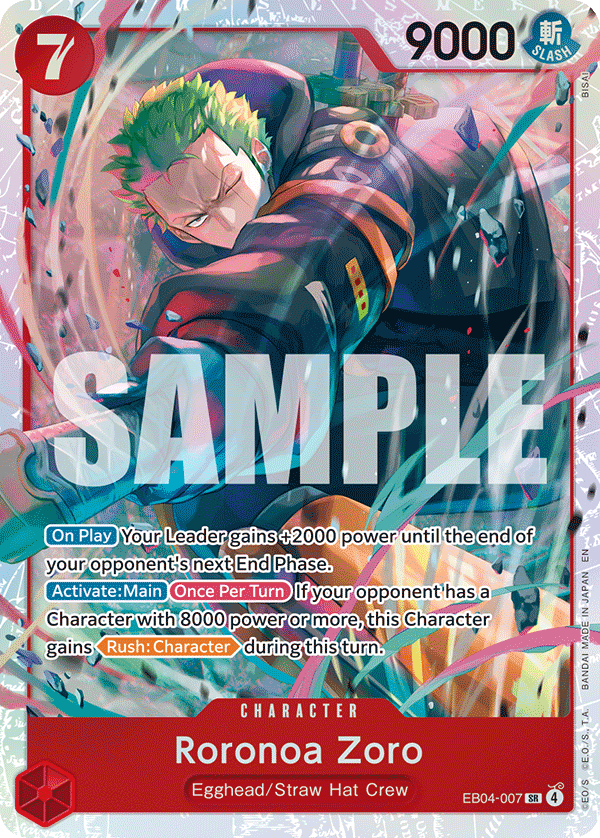 Roronoa ZoroEgghead Crisis · #EB04-007€12.39
- 8
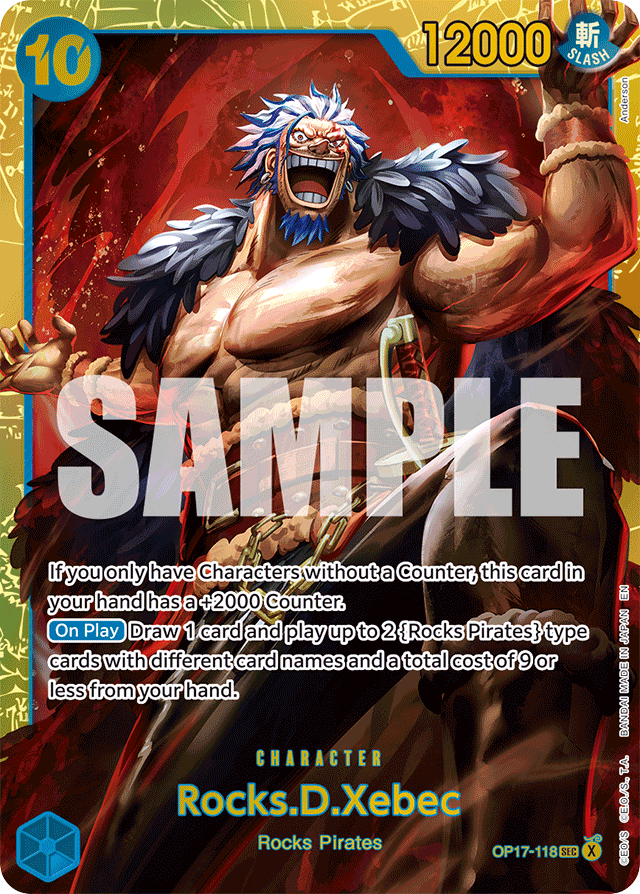 Rocks.D.XebecThe World's Strongest Warriors · #OP17-118€12.12
- 9
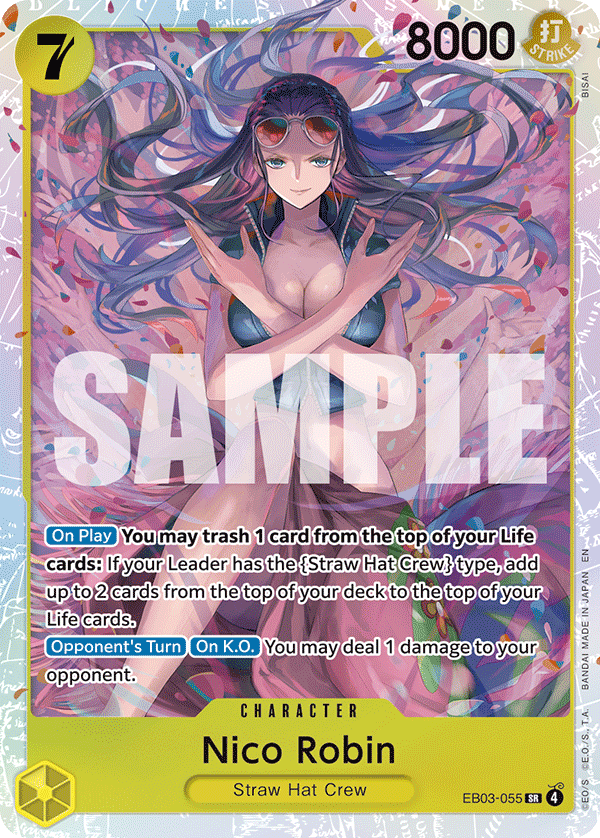 Nico RobinONE PIECE HEROINES EDITION - EB-03 · #EB03-055€11.61
- 10
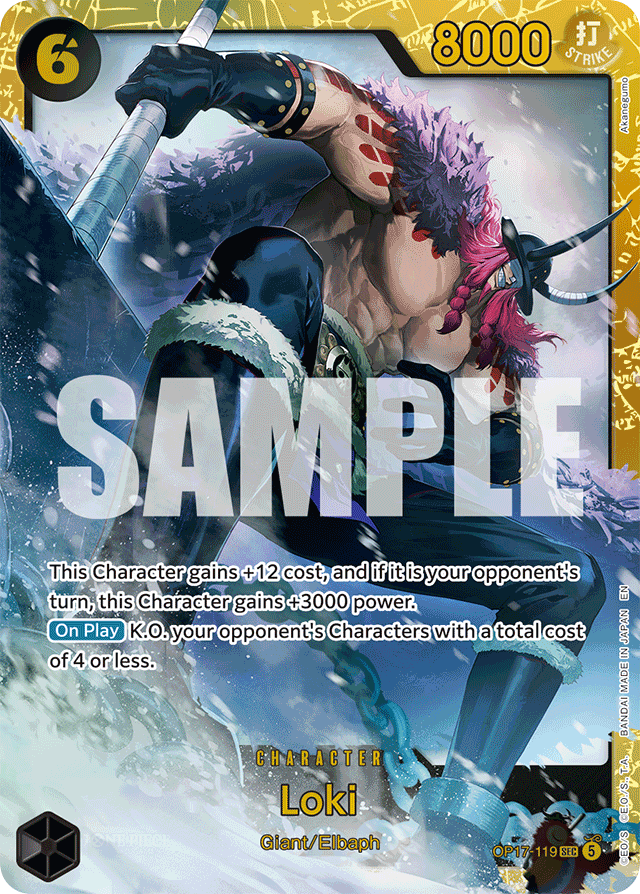 LokiThe World's Strongest Warriors · #OP17-119€9.28
If you pulled one of these from a pack, check the number and the version before you celebrate: a base card of the same character may be worth a few cents. The set pages, such as OP-17 or OP-13, show every card in every version.
Do they go up in value?#
It depends on the card, and nobody knows in advance which. In the first weeks after a set comes out, the prices of the most sought-after cards swing a good deal, and reprints or new versions of the same character can bring them down. The history on the card pages shows how a price has moved, not how it will move.
Condition and grading#
Quoted prices are for a Near Mint card. On parallels and Manga the glossy surface shows every scratch, and whitening on the back edges is obvious at first glance. Before putting a valuable card up for sale, look at it under angled light and declare the condition honestly: the scale is explained in the guide to card conditions.
One Piece cards can be graded just like Pokémon cards, by PSA, BGS or CGC: the procedure is in the grading guide. Once graded, the price depends on the grade and has a market of its own.
How to check what your card is worth#
Start from the number, at the bottom right, the rarity code and the star, if there is one. Then open the set page in the One Piece card catalogue and compare your card with the pictures of the versions: base, parallel, Manga. Choose the right edition, English or Japanese, and take the condition into account.
The Cardholo app is quicker: you point the camera at the card and the scanner recognises set, number and version, and when the photo is not enough to tell two similar versions apart it asks you which one you are holding. What the scanner does and does not do is explained in the guide to apps for card values.
Frequently asked questions
What are the most expensive One Piece cards?
As a rule, Manga and special versions of the main characters, such as Luffy and Shanks, followed by the parallels of the strongest or best-loved cards. Commons and most base versions are worth a few cents.
How can you tell if a One Piece card is rare?
Look at the code next to the number: C and UC are common and uncommon, R rare, SR super rare, SEC secret rare, L marks Leaders. Then look at the version: parallels, Manga and SP are alternative printings of the same card, much harder to find than the base version.
Are Japanese One Piece cards worth more than English ones?
There is no fixed rule: the two editions have separate markets and the ratio changes from card to card. In Europe, Japanese cards change hands less, so their prices should be taken as indicative and compared with the listings.
What are Manga cards in One Piece?
They are special parallels whose background is made of manga panels, printed in very few copies and almost always given to the main characters. They are among the most expensive cards in the One Piece Card Game.
Do One Piece cards go up in value over time?
There is no rule. The most sought-after cards swing a lot in the weeks after release, and a reprint or a new version of the same character can bring them down. The history on the card page tells you how the price has moved, not how it will move.
On Cardholo
Related guides
An app to find out what your Pokémon cards are worth
How a scanner app for Pokémon and One Piece cards works, what it really recognises, what it does not, and how to read prices by language and condition.
Updated on 31 October 2026Condition and gradingCard conditions: the scale from Mint to Poor, with examples
What MT, NM, EX, GD, LP, PL and PO mean, how to check corners, edges and surface, and how much condition moves the price. With a conversion table.
Updated on 27 September 2026Condition and gradingHow to get Pokémon cards graded from Europe, step by step
PSA, BGS, CGC or GRAAD: how to choose a company, prepare and ship your cards, with timings and middlemen. Grading from Europe, step by step.
Updated on 27 September 2026