
How much your Pokémon cards are worth
Updated on ·11 min read
In short
- Commons and uncommons are worth cents: the value sits in illustration rares, vintage holos and a handful of much-loved Pokémon.
- The price depends on the exact printing (set, number, variant), the rarity, the language, the condition and, for old cards, the edition.
- Prices move: check today’s price and the listings currently on the market, never a figure you read months ago.
In this guide
- 1What decides how much a Pokémon card is worth
- 2Find the exact printing
- 3The rarity symbols
- 4Italian, English or Japanese?
- 5How much condition matters
- 6First Edition and Shadowless
- 7How to read a price
- 8Is it worth getting it graded?
- 9Do Pokémon cards gain value over time?
- 10Why some cards cost so much
- 11Where to start with a box of cards
- 12Frequently asked questions
What decides how much a Pokémon card is worth#
How much are Pokémon cards worth? Most of them, a few cents. Commons and uncommons are printed by the million, and anyone who has opened a few packs has a box full of them. The real value lies in a minority of cards: illustration rares, well-kept holos from the early sets, the Pokémon everybody is after. There the figures change scale, and in September 2026 the most sought-after cards from the latest sets go for more than a hundred euros.
To work out which group your card belongs to, you need to look at five things:
- the exact printing: set, collector number and variant;
- the rarity, meaning how hard it is to pull from a pack;
- the language, because Italian, English and Japanese cards have separate markets;
- the condition, from a flawless card to a creased one;
- for old cards, the edition and the print run.
Then there is a factor you cannot measure: how loved the Pokémon is. At the same rarity, a Charizard or an Umbreon is worth more than a Pokémon nobody collects. It is not rational, but that is how the market works.
Find the exact printing#
The name is not enough. Charizard ex has been printed in many versions, and it can appear more than once within the same set. In 151 there are three: the number 006 (€3.45), which turns up fairly often, the number 183 (€37.81), a full art, and the number 199 (€279.99), the special illustration everyone was chasing when the set came out. Same Pokémon, same game rules. The prices in brackets tell the rest.
Where to read the number and the set
On cards released from 2023 onwards, that is from the Scarlet & Violet series, look at the bottom left. You will find a three-letter code, for example MEW for 151 or PRE for Prismatic Evolutions, and the number in the format 199/165. The letter in a box next to it tells players which tournaments the card is legal in: it has no effect on value.
The number after the slash is the official size of the set. When the first number is higher, as in 199/165, you are holding a secret card, printed beyond the numbering: it is usually one of the rares that matter. On cards from the early years the number sits at the bottom right, and the set is identified by a small symbol below the right-hand corner of the artwork. The exception is Base Set, which has no symbol at all.
That leaves the variant. The same card can come as a regular, a reverse holo (with the foil finish over the whole card except the artwork) or with a promotional stamp, and each version has its own price. When you compare two listings, make sure they are about the same printing.
The rarity symbols#
The symbol next to the number tells you how rare the card is: a circle for commons, a diamond for uncommons, a black star for rares. Since the Scarlet & Violet series the stars have become a scale. Two black stars mark the double rares (the ex in their basic version), two silver ones the ultra rares, that is the full arts, one gold star the illustration rares, two gold stars the special illustration rares, three gold stars the hyper rares with their gold borders.
Pikachu shows the jump from one step to the next well. In 151 the common Pikachu, number 025 (€0.02) is among the easiest cards to find, while the number 173 (€40.00) is an illustration rare. With Umbreon, in Prismatic Evolutions, the gap is sharper still: the double rare Umbreon ex 060 (€1.50) against the special illustration Umbreon ex 161 (€700.00).
Illustration rares are popular because the art fills the whole card, often a scene rather than just the Pokémon, and because they are pulled so rarely. You can tell them by touch as well: the surface has a raised texture that ordinary cards lack.
Italian, English or Japanese?#
Every language has its own market. The same card in Italian, in English and in Japanese is not worth the same amount, and there is no fixed rule about which costs more: it depends on how many copies are around and who is looking for them. Always compare within the same language. Using the price of the English card to sell an Italian one, or the other way round, is one of the most common mistakes in listings.
Japanese cards are a case apart, because they have their own sets and numbering. The Charizard ex 199 from 151 sits, in Japan, in the set Pokémon Card 151 (code SV2A) as number 201. There are official Chinese editions too, with a different market again.
On Cardholo’s card pages the lowest prices are split by language, and at the bottom of the page you will find the other versions of the same card, Japanese edition included.
How much condition matters#
Quoted prices almost always refer to a Near Mint card, one that looks new at a glance. A card with white edges or a scratch on the holo is worth less, and a creased one is worth a fraction. Cardholo uses the seven-grade European scale and estimates value by applying these factors to the Near Mint price:
| Condition | Code | Factor | On €100 NM |
|---|---|---|---|
| Mint | MT | 105% | €105.00 |
| Near Mint | NM | 100% | €100.00 |
| Excellent | EX | 90% | €90.00 |
| Good | GD | 75% | €75.00 |
| Light Played | LP | 60% | €60.00 |
| Played | PL | 40% | €40.00 |
| Poor | PO | 25% | €25.00 |
These are estimates. On a common card condition counts for little, because the starting value is already minimal; on an expensive card every step is real money. How to recognise each grade, flaw by flaw, is explained in the guide to card conditions.
First Edition and Shadowless#
On cards from the early years, two more details come into play. The first is the Edition 1 stamp, a small black circle on the left below the artwork, which marks the first print run. The second concerns the English Base Set: the earliest copies have no shadow along the right-hand edge of the artwork box, which is why they are called Shadowless.
The classic example is the Base Set Charizard (€620.39): between a regular copy, a Shadowless one and a first edition, the difference is one of category, not of a few euros. On vintage cards condition weighs more too, because after more than twenty-five years truly clean copies are few.
How to read a price#
A quoted price is not the price you will sell at. It is a reference, and it pays to know what it measures. The lowest price someone is offering a card at today, the average of the offers and the price of completed sales are three different numbers. On a card that rarely changes hands they can be far apart.
On a Cardholo card page you will find the lowest Near Mint price, the European average, the lowest prices by language, the 7-day and 30-day averages and the price history chart. Prices are updated every day from the European market. Read them together: a low far below the average may be a bargain, or a copy in worse shape than described.
Then look at the active listings, meaning what sellers are asking today for that printing. For graded cards, the prices shown on Cardholo are exactly that: asking prices from listings active on the market, not completed sales.
Is it worth getting it graded?#
A graded card has been assessed by a specialist company (PSA, BGS, CGC, GRAAD and others), sealed in a plastic case, the slab, and given a grade from 1 to 10 with a certificate number. Its price cannot be derived from that of the raw card. It is a separate market, where the gap between a 9 and a 10 of the same card can be enormous.
Grading costs money, takes weeks (sometimes months) and the grade is not guaranteed. It makes sense for cards that are already worth a fair amount raw and are in truly excellent condition; on a card worth a few euros the outlay is unlikely to come back. Fees change often, so check the company’s official price list before you decide. The full process is in the guide to grading Pokémon cards.
Do Pokémon cards gain value over time?#
Some do, many do not. In the price histories you will find cards that climbed years after their set came out and others that collapsed as soon as the excitement of the first weeks was over, or after a reprint. The past does not tell you what will happen. Nobody knows which cards will go up, and anyone who promises you otherwise usually has something to sell you.
The history is useful for something else: seeing whether you are buying or selling at a normal moment or during a spike. And if you buy the cards you like at a sensible price, when the market falls you are still left with a card you like.
Why some cards cost so much#
High prices come from several reasons adding up: a card that is hard to pull from packs, a Pokémon everybody likes, an illustration collectors rank among the best in the set, few copies in perfect condition. The Umbreon VMAX from Evolving Skies that collectors call Moonbreon, after the big moon behind it, has them all, and the price confirms it: Umbreon VMAX 215 (€2,380.00).
These are the most valuable cards among the most recent European sets, at today’s prices:
- 1
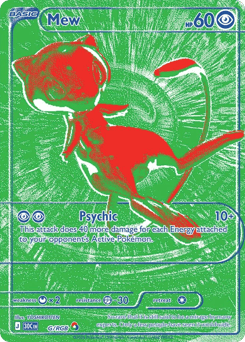 Mew30th Celebration · #G€2,579.99
- 2
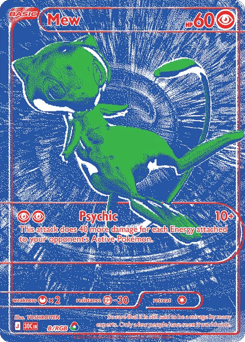 Mew30th Celebration · #B€2,299.95
- 3
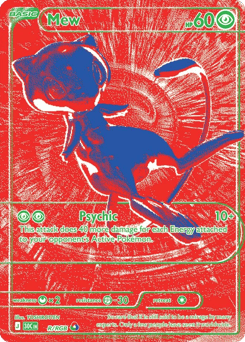 Mew30th Celebration · #R€2,150.00
- 4
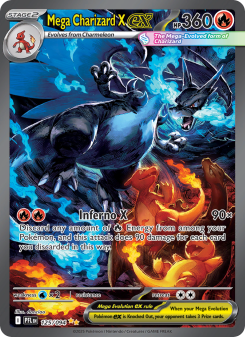 Mega Charizard X exPhantasmal Flames · #125€535.00
- 5
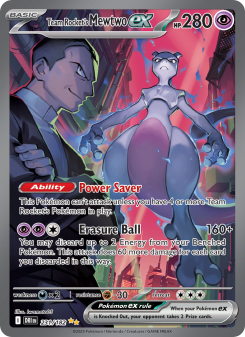 Team Rocket's Mewtwo exDestined Rivals · #231€529.00
- 6
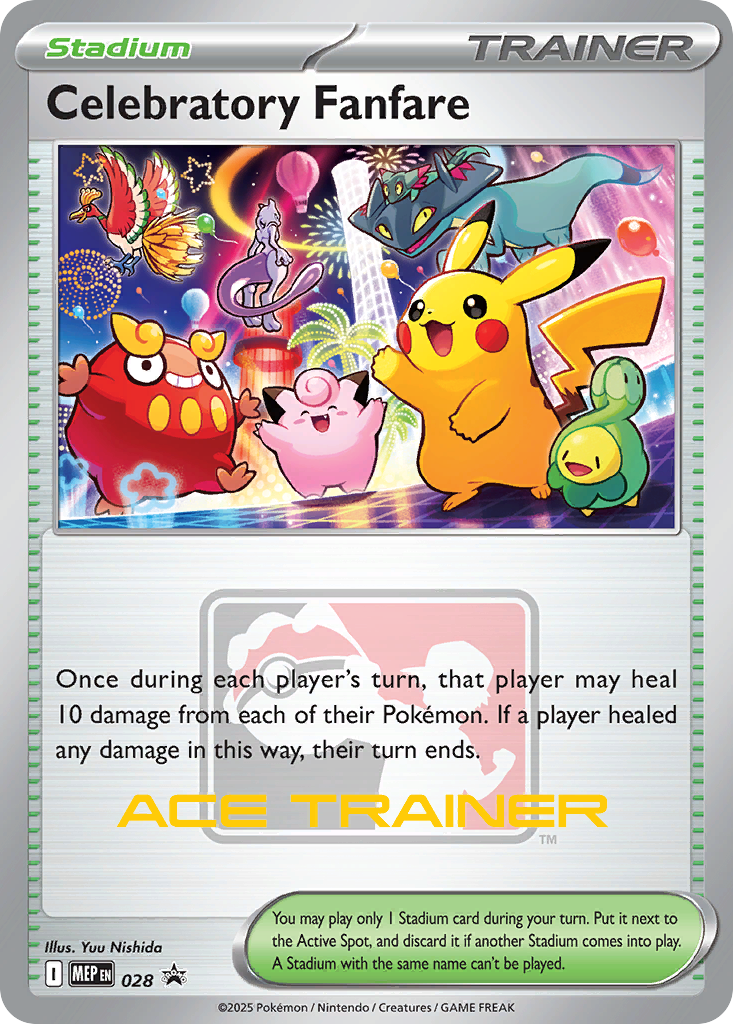 Celebratory FanfareMEP Black Star Promos · #028€465.49
- 7
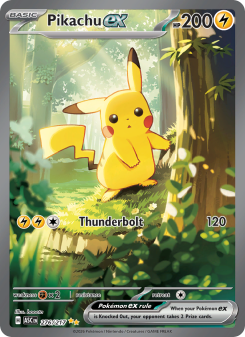 Pikachu exAscended Heroes · #276€419.99
- 8
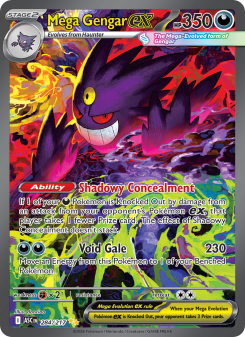 Mega Gengar exAscended Heroes · #284€360.00
Where to start with a box of cards#
If you have a box of cards and no idea what is in it, do not check them one by one. Sort them first. Set aside the cards with stars, the holos, the full arts, those numbered higher than the size of the set, and the vintage ones. Commons and uncommons can wait until last: exceptions exist, but they are few.
On the pile that is left, a scanner saves hours. With the Cardholo app you point the camera at the card, the scanner recognises set, number and variant and shows you the price; the free account gives you 30 scans a month. You set the condition yourself, though, and the scanner identifies the card without telling you whether it is genuine: for copies that look odd to you there is the guide to fake Pokémon cards. How these apps work, and what to expect from them, is explained in the guide to apps for Pokémon card values.
To browse prices set by set, start from the Pokémon card catalogue.
Frequently asked questions
How do I find out how much my Pokémon cards are worth?
Identify each card by set, number and variant (you will find them at the bottom of the card), then check language and condition and compare today’s price with the active listings for the same printing. A scanner app like Cardholo recognises set, number and variant from a photo and shows the price; the condition has to be set by hand.
Which Pokémon cards are worth the most?
As a rule, the special illustrations from recent sets, holos from the early sets in excellent condition and first editions, especially when they show much-loved Pokémon such as Charizard, Pikachu or Umbreon. Commons and uncommons are almost always worth a few cents.
Are Pokémon cards worth the same in every language?
No, and there is no fixed rule about which language is worth more: each one has a separate market and the difference changes from card to card. Always compare the price of the card in its own language; on Cardholo’s card pages the lowest prices are split by language.
Do Pokémon cards go up in value over time?
Some do, many do not: after a set comes out prices swing a lot, and reprints can bring them down. The price history shows what has happened so far, but nobody can predict what comes next.
How much is a damaged Pokémon card worth?
Less, sometimes much less. As an indicative estimate, Cardholo values a Played card at 40% of the Near Mint price and a Poor one at 25%. On common cards condition counts for little, because the starting value is already minimal.
On Cardholo
Related guides
Card conditions: the scale from Mint to Poor, with examples
What MT, NM, EX, GD, LP, PL and PO mean, how to check corners, edges and surface, and how much condition moves the price. With a conversion table.
Updated on 27 September 2026Value and pricesAn app to find out what your Pokémon cards are worth
How a scanner app for Pokémon and One Piece cards works, what it really recognises, what it does not, and how to read prices by language and condition.
Updated on 31 October 2026Condition and gradingHow to get Pokémon cards graded from Europe, step by step
PSA, BGS, CGC or GRAAD: how to choose a company, prepare and ship your cards, with timings and middlemen. Grading from Europe, step by step.
Updated on 27 September 2026